Immune checkpoint inhibitors myotoxicity: diagnostic criteria and therapeutic consensus
- Number 293
- Date 6 March 2026
293rd ENMC International Workshop:
Immune Checkpoint Inhibitor-Induced Myotoxicity: Diagnostic and Therapeutic Consensus
Location: Hoofddorp, The Netherlands
Date: 6–8 March 2026
Organisers:
Prof. Y. Allenbach (France), Prof. J.E. Salem (France), Prof. I. Pinal-Fernández (USA)
Early Career Researchers:
Dr S. Tayb-Boulahfa and Dr L. Plomp
Participants:
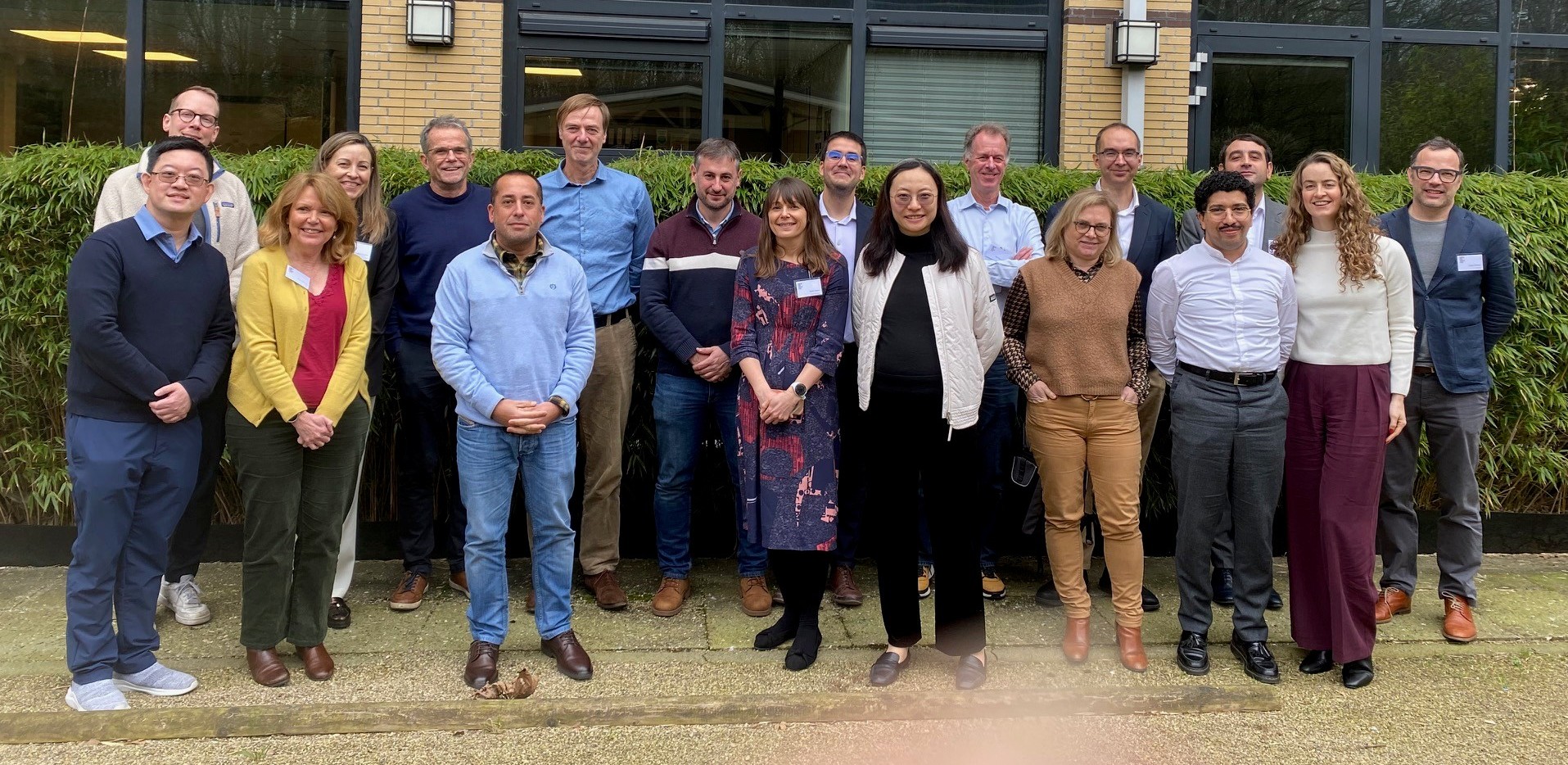
Prof. Y. Allenbach (France), Prof. J.E. Salem (France), Prof. I. Pinal-Fernández (USA), Dr. S. Leonard-Louis (France), Prof. W. Stenzel (Germany), Prof. T. Liewluck (USA), Prof. L. Lehmann (Germany), Dr. S. Tansley (United Kingdom), Prof. J. Damoiseaux (The Netherlands), Prof. R. Wang (China), Dr. E. Trallero-Araguás (Spain), Dr. J. Milisenda (Spain), Dr. J. Alvarez-Troncoso (Spain), Dr. L. Plomp (The Netherlands), Dr. C. Nelke (Germany), Prof. S. Matecki (France), Dr. T. Lopez-Fernandez (Spain), Dr. S. Tayb-Boulahfa (France), Mr. C. Ungar (France, patient representative)
Translations of this report by :
Chinese by Prof. R. Wang
Dutch by Dr L. Plomp
French by Dr S. Tayb-Boulahfa
German by Dr C. Nelke
Spanish by Dr Lopez-Fernandez
Background
Immune checkpoint inhibitors (ICIs) have reshaped the treatment landscape of oncology over the past two decades. By blocking co-inhibitory receptors, these monoclonal antibodies restore anti-tumor T-cell activity and have transformed outcomes across many malignancies. More than half of cancer patients are now eligible for ICI treatment. With increasing use in neoadjuvant, adjuvant and combination protocols across various solid tumors, the exposed population continues to expand.
The mechanism that makes ICIs effective is inseparable from the mechanism that generates their toxicity, called immune-related adverse event (irAE). Forty to eighty procent of patients develop irAEs of any grade. Among them, ICI-induced myotoxicity carries the highest case-fatality rate. Despite this, there were no internationally agreed criteria to diagnose it and no evidence-based treatment guidelines.
Workshop aims
The workshop brought together 19 specialists in neuromuscular disease, cardiology, immunology, muscle pathology, and respiratory medicine from 7 countries, alongside a patient representative, to answer four key questions: (i) What exactly is ICI-induced myotoxicity and how should it be diagnosed? (ii) Which tests are needed? (iii) How does it develop in the body? (iv) How should it be treated?
Workshop outcomes
The workshop reached consensus on several important points. First, the group agreed on a single unified name, "ICI-induced myotoxicity", replacing a confusing patchwork of terms. Second, for the first time, provisional diagnostic criteria were defined: a clear set of clinical and laboratory findings that confirm the diagnosis, with muscle biopsy as the definitive test. Third, the workshop formally rejected the concept that patients develop myasthenia gravis (a neuromuscular junction disease) from ICIs, a misconception that had led to patients being given an ineffective drug. Fourth, the group endorsed a new severity-based treatment algorithm that avoids high-dose steroid pulses and instead uses lower-dose steroids combined with targeted immunotherapy drugs (abatacept and ruxolitinib) in severe cases. Fifth, the workshop highlighted diaphragm monitoring as a life-saving priority: many preventable deaths occur from undetected breathing muscle failure, and simple bedside tests can identify patients at risk before it becomes critical.
Impact for patients and their families
A patient who survived severe ICI myotoxicity in 2021, opened the workshop by describing his experience. His cancer has been in remission since December 2024 and his testimony reminded all participants of what is at stake and why this work matters.
For patients and families, these consensus outputs mean that clinicians worldwide will have common criteria to diagnose this condition, and a concrete, evidence-based treatment consensus. These monitoring tools serve as an early warning system for life-threatening complications.
Next steps
The consensus criteria and treatment algorithm will be submitted for publication in the journal Neuromuscular Disorders. The group has agreed on research priorities, including a multinational clinical trial of the new treatment approach versus standard care, prospective validation of the diagnostic criteria, and studies to identify the precise muscle protein that the immune system is mistakenly targeting. Translations of the key clinical tools are planned to support dissemination to non-specialist centres.
A full report will be publisched in Neuromuscular Disorders.