Diagnosis and management of paraproteinemic myopathies focusing on sporadic late onset nemaline myopathy (SLONM) and light chain (AL) amyloid myopathy
- Number 294
- Date 27 March 2026
294th ENMC International Workshop:
Location: Hoofddorp, The Netherlands
Title: Diagnosis and management of paraproteinemic myopathies focusing on sporadic late onset nemaline myopathy (SLONM) and light chain (AL) amyloid myopathy
Date: 27-29 March 2026
Organisers:
Prof. T. Liewluck (USA), Dr F. Kleefeld (Germany), Dr M. Garibaldi (Italy), Prof. P. Laforet (France)
Early career researchers:
Dr A. Lauletta, Dr J.M. Schwarz, Dr E. Torchia
Translations of this report by:
Chinese by Prof. C. Yan
Dutch by Prof. N. Voermans
French by Prof. P. Laforet
German by Dr. F. Kleefeld
Italian by Dr A. Lauletta
Japanese by Prof. I. Nishino
Spanish by Dr E. Gallardo
Thai by Prof. J. Tanboon
Participants:
Prof. O. Benveniste (France), Prof. K. Claeys (Belgium), Prof. D. Dubey (USA), Dr E. Gallardo (Spain), Dr M. Garibaldi (Italy), S. Gosteli (Patient representative, Switzerland), Dr F. Kleefeld (Germany), Dr. R. Kotchetkov (Canada), Prof. P. Laforet (France), Dr. A. Lauletta (Italy), Dr S. Leonard-Louis (France), Prof. T. Liewluck (USA), Prof. J. Milisenda (Spain), Prof. M. Milone (USA), Prof. E. Muchtar (Israel), Prof. I. Nishino (Japan), Dr. J.M. Schwarz (Germany), Prof. W. Stenzel (Germany), Prof. J. Tanboon (Thailand), M. Tierens (Patient representative, Belgium), Dr E. Torchia (Italy), Prof. N. Voermans (The Netherlands), Prof. C. Yan (China).
Background
Paraproteinemic myopathies are a heterogeneous group of rare, yet treatable muscle disorders caused by abnormal proteins in the blood, known as paraproteins or monoclonal proteins (MP), produced by a plasma cell or B-cell clone, typically in the setting of monoclonal gammopathies; hence, they are also referred to as monoclonal gammopathy–associated myopathies (MGAMs). The most commonly recognized entities include sporadic late-onset nemaline myopathy (SLONM) and light-chain (AL) amyloid myopathy. SLONM is associated with MP in approximately 50% of cases, with a typically more severe clinical presentation. Historically, SLONM with MP (SLONM-MP) was associated with a poorer prognosis compared to cases without MP. However, with advances in plasma cell–directed therapies, outcomes have significantly improved and are now comparable to those without MP. AL amyloid myopathy is caused by the deposition of amyloid fibrils derived from misfolded immunoglobulin light chains in muscle tissue, often as part of a systemic amyloidosis. Despite being potentially treatable, these conditions remain likely underrecognized and frequently misdiagnosed because of the lack of standardized diagnostic criteria and pathways, often resulting in delayed diagnosis and suboptimal treatment outcomes. This represents a major unmet need, particularly given the availability of therapies that may improve outcomes when initiated early.
Workshop aims
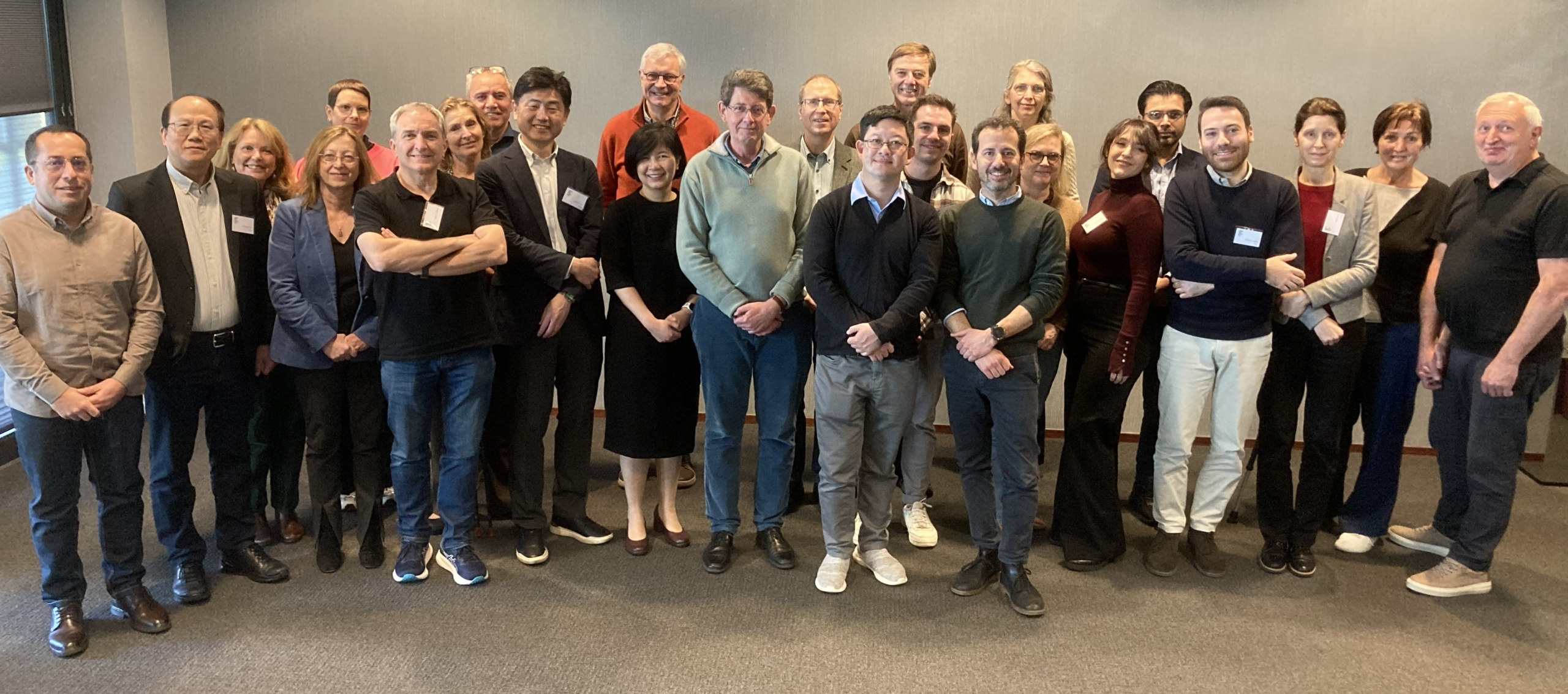
The workshop brought together 21 physicians and researchers from 12 countries, including specialists in neuromuscular diseases, immunology, muscle pathology, haematology, and molecular biology, along with two patient representatives and their accompanying family members. The discussion focused on five main points: (1) defining the clinical and pathological spectrum of paraproteinemic myopathies, (2) identifying the most appropriate diagnostic pathway for patients with suspected paraproteinemic myopathies, (3) refining disease classification, particularly across different subtypes, (4) developing consensus diagnostic criteria for SLONM, and (5) reviewing current therapeutic approaches and providing treatment guidelines. In addition, the workshop sought to promote multidisciplinary collaboration and lay the foundation for an international research network to advance knowledge and patient care in this field.
Workshop outcomes/deliverables
The workshop reached consensus on several key points and yielded practical recommendations to improve diagnosis and management of these conditions. First, the group agreed to use the term “monoclonal gammopathy of muscle significance” (MGMS), rather than MGUS (“monoclonal gammopathy of undetermined significance”), in patients with paraproteinemic myopathies, to better reflect that the MP is directly causing muscle disease and should not be considered harmless. Second, for the first time, diagnostic criteria for SLONM were proposed, including a combination of clinical and laboratory findings, with the histological identification of nemaline bodies or rods serving as a key feature of definite and possible cases. Third, the group developed a treatment algorithm based on the presence or absence of a MP: in patients with SLONM-MP or MGAMs, early referral to a haematologist, particularly one with expertise in amyloidosis or plasma cell disorders, is recommended to initiate plasma cell-targeted therapy, including monoclonal antibodies, such as daratumumab, chemotherapy, or stem cell transplantation, with intravenous immunoglobulins (IVIg) used as an early bridging treatment rather than a definitive option. In contrast, in SLONM patients without a MP, treatment is mainly based on IVIg, with additional immunosuppressive therapies considered in non-responders or introduced early in combination with IVIg in severe cases. Fourth, the workshop emphasized the importance of improving recognition of AL amyloid myopathy, recommending Congo red staining as part of the routine histopathological evaluation in patients with suspected myopathy. Finally, a recently described novel subtype of paraproteinemic myopathies, pathologically characterized by glycogen filled vacuoles in muscle fibers, was discussed.
Impact for the patients and their families
These outputs will support the development of shared guidelines and will be disseminated through scientific publications, international collaborations, and engagement with patient organizations, with the aim of improving awareness, facilitating diagnosis, and enabling prompt treatment to achieve the best possible outcomes.
Next steps
The consensus diagnostic criteria and treatment algorithm will be prepared for publication in Neuromuscular Disorders. The group identified key research priorities, including multinational studies (both prospective and retrospective) to compare various forms of plasma cell-targeted therapies in SLONM-MP, assess long-term outcomes, degree of clinical improvements, and relapse rates, as well as prospective validation of the diagnostic criteria of SLONM.
A full report has been published in Neuromuscular Disorders (PDF)