Harmonizing Clinical Monitoring in FSHD: Clinical Outcome Measures, Patient Perspectives, and Digital Innovations for the Upcoming Era of Drug Therapies
- Number 295
- Date 1 May 2026
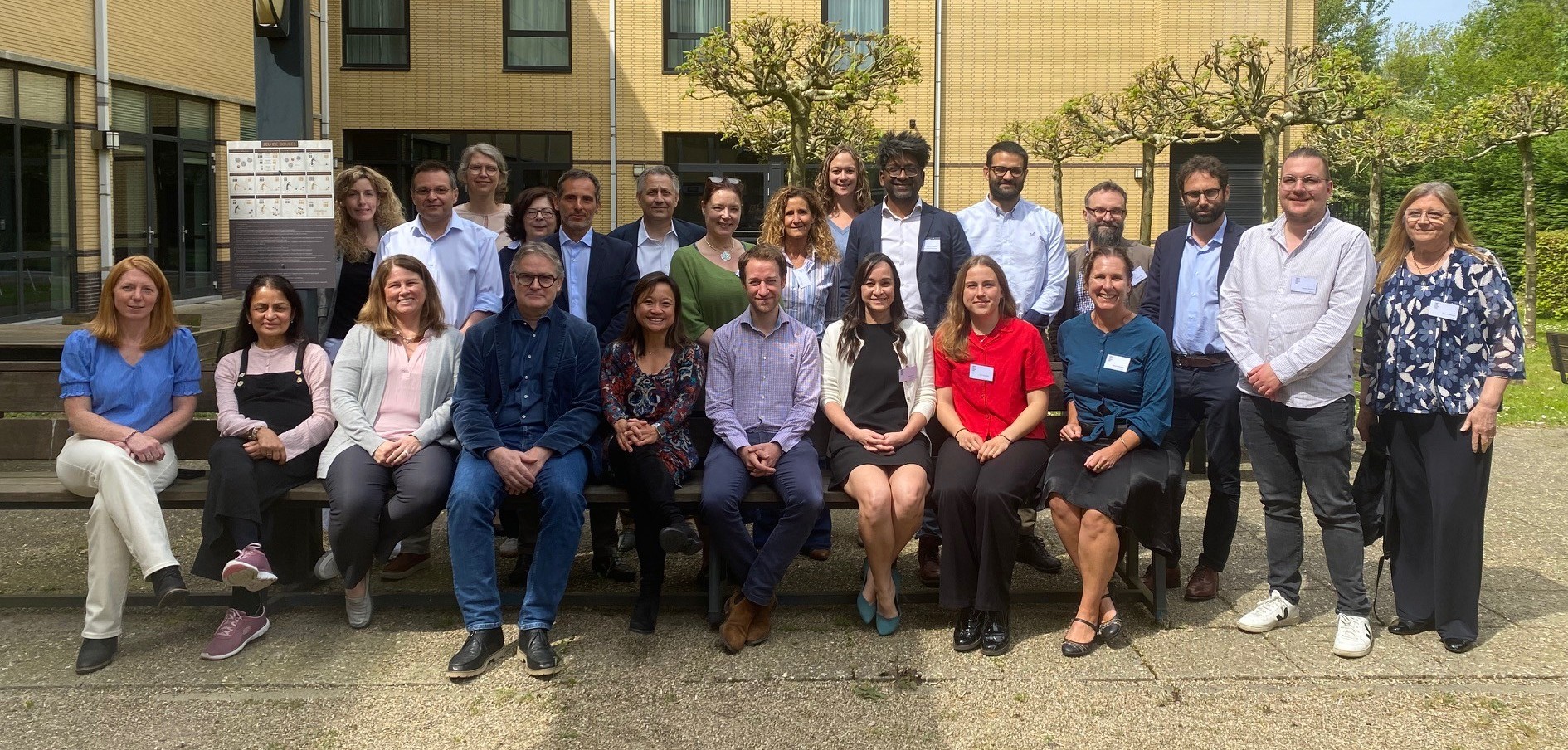
295th ENMC International Workshop
Location: Hoofddorp, The Netherlands
Title: Harmonizing Clinical Monitoring in FSHD: Clinical Outcome Measures, Patient Perspectives, and Digital Innovations for the Upcoming Era of Drug Therapies
Date: 1–3 May 2026
Organisers: Dr E. Bugiardini (United Kingdom), Dr K. Eichinger (United States), Prof. B. Schoser (Germany).
Early Career Researchers: Dr H. Erdmann (Germany), Ms L. Schuckert (The Netherlands).
Translations of this report by:
German: Prof. B. Schoser
Dutch: Dr. R de Haas
Portugese: Dr T Evangelista
Italian: Dr G. Ricci
Greek: Dr G.K. Papadimas
Participants: Ms R. Badiani (United Kingdom), Dr. R. de Haas (The Netherlands), Dr N. Dubuisson (Belgium), Dr T. Duong (United States), Dr H. Erdmann (Germany), Dr T. Evangelista (France), Prof. M. Filosto (Italy), Dr M. Hatch (United States), Dr C. Hewamadumma (United Kingdom), Ms A. Hill (United States), Dr R. Muni Lofra (United Kingdom), Prof. T. E. Mongini (Italy), Dr G. K. Papadimas (Greece), Dr G. Ricci (Italy), Dr M. Rodrigues (New Zealand), Prof. V. Sansone (Italy), Dr L. Schuckert (The Netherlands), Prof. J. Statland (United States), Prof. G. Tasca (United Kingdom), Prof. N. Voermans (The Netherlands), Prof. T. Willis (United Kingdom).
Background
Facioscapulohumeral muscular dystrophy (FSHD) is one of the most common inherited muscle diseases. It usually starts by weakening the muscles of the face and shoulders and over time can affect the arms, legs, trunk and breathing muscles. The disease progresses very differently from one person to another, and beyond muscle weakness many patients also experience pain, fatigue, and reduced quality of life. New treatments for FSHD are approaching approval, but there is currently no agreed international standard for how doctors should follow up FSHD patients in everyday clinical practice. Different countries, and even different clinics, measure different things, use different tools, and have different amounts of time available for each visit.
Workshop aims
The workshop aimed to agree on a shared, practical way to monitor FSHD in routine clinical care: a way that works in different clinical settings, that includes the patient's own experience, and that is ready for the era of new therapies. Specific aims were to map current monitoring practices internationally, to assess existing outcome measures and their feasibility in routine care, to identify factors important for grouping patients, to evaluate the role of digital tools, and to identify clinical needs that are currently neglected.
Workshop outcomes
A pre-workshop survey across 18 countries confirmed substantial variability in clinical practice and limited collection of patient-reported outcomes (PROs). Building on this, the workshop proposed a tiered monitoring framework, a core minimum dataset to be used in every clinic, an extended set for academic centres, and a more comprehensive set for research and clinical trial centres. This framework will allow data to be compared across countries while remaining realistic about clinical resources. Pain, fatigue and PROs were recognised as systematically under-assessed and prioritised for action. Dedicated working groups were agreed to standardise pain assessment in FSHD and to refine the clinical definition of disease onset. This work builds on existing efforts in the field, including the upcoming international FSHD Standards of Care and the recommendations from the 279th ENMC workshop on childhood-onset FSHD
The workshop also recognised the importance of digital tools and wearable technologies for future clinical monitoring. Outcomes will be disseminated through publication, the FSHD Clinical Trial Research Network, the FSHD European Trial Network, the PaLaDIn Consortium, ERN EURO-NMD, TREAT-NMD, and patient organisations.
Impact for patients and their families
Patients across countries will benefit from more consistent, comparable clinical follow-up. Symptoms that strongly affect daily life, particularly pain and fatigue, will be more systematically recognised. The framework will also help ensure that new treatments can be evaluated fairly and quickly in real-world clinical settings.
Next steps
Final consensus on individual measures will be formalised at a follow-up meeting in 2026, with working groups progressing in parallel.
A full report will be published in Neuromuscular Disorders.