Developing Standards of Care for patients with Becker Muscular Dystrophy (BMD)
- Number 290
- Date 21 November 2025
290th ENMC International Workshop
Location: Hoofddorp, The Netherlands
Title: Developing Standards of Care for patients with Becker Muscular Dystrophy (BMD)
Date: 21st-23rd November 2025
Organisers: Prof. Michela Guglieri (Newcastle University), Dr Erik Niks (Leiden University), Prof. Elena Pegoraro (University of Padova), Prof. Ros Quinlivan (University College of London).
Early Career Researchers: Dr Pietro Riguzzi (Newcastle University and University of Padova) and Dr Nienke Van der Velde (Leiden University).
Translations of this report:
German by Josef Finsterer
French by Karim Wahbi
Danish by Mads Stemmerik
Italian by Pietro Riguzzi and Ilaria Zito
Dutch by Nienke Van Der Velde
Spanish by Nuria Muelas Gomez
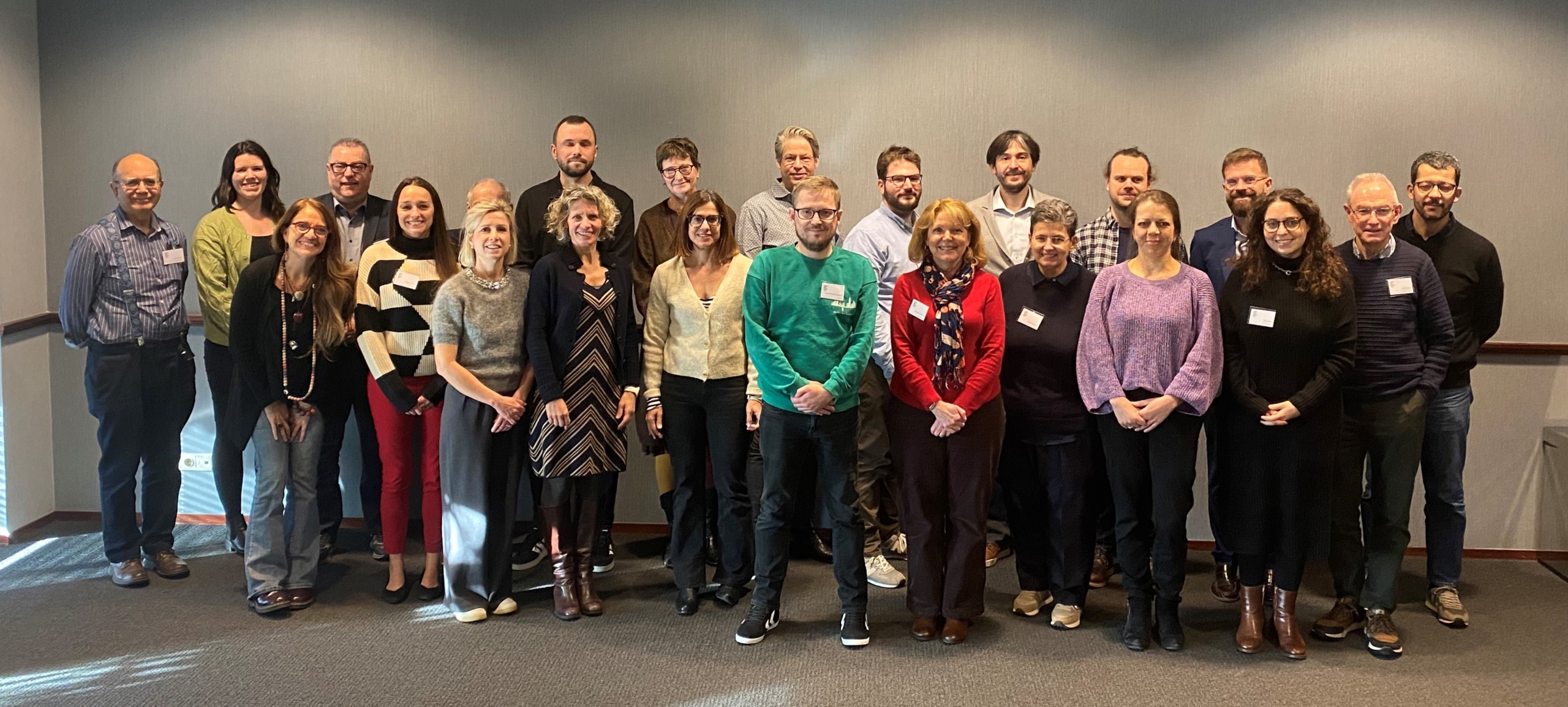
Participants: Prof Michela Guglieri (UK), Dr Erik Niks (Netherlands), Prof Elena Pegoraro (Italy), Prof Ros Quinlivan (UK), Dr Adnan Manzur (UK), Dr Chloe Geagan (UK), Dr Ilaria Zito (Italy), Dr John Bourke (UK), Dr Josef Finsterer (Austria), Dr Karim Wahbi (France), Prof Edoardo Malfatti (France), Mr Keith Robson (UK), Mr Lasse Blichfeldt Haastrupt (Denmark), Prof Liesbeth De Waele (Belgium), Dr Lindsay Alfano (USA), Prof Luca Bello (Italy), Dr Mads Peter Godtfelt Stemmerik (Denmark), Dr Nuria Muelas Gomez (Spain), Dr Philippe Collin (Netherlands), Dr Anna Mayhew (UK), Dr Talia Eilon (UK), Dr Pietro Riguzzi (UK), Dr Nienke Van Der Velde (Netherlands).
Summary:
The ENMC workshop on Becker muscular dystrophy (BMD) took place on 21–23 November 2025 and brought together clinicians, researchers, advocacy groups, and patients from across Europe and the United States. The aim of the meeting was to review current clinical practice regarding diagnosis and care of patients with BMD, identify challenges and gaps in knowledge, and outline priorities for international clinical recommendations. Surveys tailored to patients and clinicians, developed specifically for the workshop, were analysed, and published Italian and French recommendations were reviewed.
Key highlights included the delays in diagnosis, with many patients waiting more than two years before receiving a genetic diagnosis of BMD. Patients with preserved muscle strength appear to be particularly at risk of late or missed diagnosis in some countries where creatine kinase (CK) testing is not routinely performed. Participants discussed ways to improve diagnostic pathways. While the investigations used are generally appropriate, the order in which they are carried out may not always be the most efficient and could contribute to delays. CK testing remains the first diagnostic step, followed by genetic testing. In exceptional cases, single investigations may not be definitive, and a more comprehensive approach, combining genetic testing, muscle biopsy to assess dystrophin expression, and careful evaluation of the clinical presentation and progression over time, may be required to define the diagnosis.
The need for a multidisciplinary approach was highlighted, in which healthcare professionals from different backgrounds work together, including neuromuscular specialists, physiotherapists, heart specialists, geneticists, and mental health professionals, with the involvement of more specialists required in individual cases or as the condition changes over time.
Muscle MRI in BMD shows promise as a marker of disease progression in research studies and allows to detect changes within 1-2 years, but its implementation needs further development and standardisation.
There is still a lack of evidence to guide clinical care in several key areas, including pain management and the use of steroids, both in weaker patients and in stronger individuals who nonetheless experience severe pain and cramps.
Exercise was discussed as generally safe and beneficial, but programmes need to be designed with specialist input.
Heart involvement remains a key aspect of concern in BMD care. Experts discussed the importance of early heart scans, including echos or MRI, and early treatment. However, they also acknowledged the ongoing challenge of determining the optimal time to begin surveillance and treatment, as well as appropriate follow-up frequencies, especially in younger and less affected patients.
Respiratory (breathing) involvement is uncommon in BMD, but still requires regular monitoring at key stages, especially in patients who are no longer able to walk or move independently.
Bone health was discussed, especially the importance of regularly checking and supplementing vitamin D.
Anaesthetic risk was discussed at length as proper precautions and careful selection of anaesthetic drugs are required when patients with BMD undergo general anesthesia due to potential complications. There is a need for more education of patients, families, and healthcare professionals regarding this aspect of care.
Brain and mental health issues in BMD including autism, attention deficit hyperactivity disorder (ADHD), learning difficulties, and anxiety are increasingly recognised at all ages. Assessments of brain function and access to psychological support were identified as important, currently unmet needs. When psychiatric medication is needed, usual treatment guidelines should be followed. Extra support from the multidisciplinary team might be needed, especially by consulting with the heart specialist.
Throughout the workshop, participants agreed on the need for stronger international collaborations, improved data collection, education strategies to enhance patient and healthcare professional awareness, and development of unified standards of care. These efforts will help ensure that individuals with BMD receive timely diagnosis, appropriate monitoring, genetic counselling, and comprehensive lifelong support.
The great variability of BMD requires an individualised approach in most cases, with further tailoring for both adults and children.
A full scientific report of the meeting will be published in Neuromuscular Disorders (PDF).